

![The photographic glass plates of a total solar eclipse in 1875 made during a Royal Society expedition to Siam [Thailand].](/sites/default/files/styles/media_demo_full_cropped/public/2026-08/eclipse_plates_1875_4.jpg?itok=7pO2Gr58)

Photographic glass plates of a total solar eclipse made 151 years ago during a Royal Society expedition to Siam [Thailand] have been rediscovered in the archives of the Royal Astronomical Society and are about to be returned to our former next-door neighbours just in time for the latest solar eclipse, on 12 August 2026.
Keith Moore, Head of Library at the Royal Society, said: "Librarians always like loans to be returned – even over a century late! (no fines are due…)."
The plates were loaned to the Royal Astronomical Society in 1897 when the Royal Society was also accommodated in Burlington House, before moving to its present headquarters at Carlton House Terrace.
The images of the Victorian era total solar eclipse were captured by 23-year-old Manchester-based physicist Arthur Schuster (1851-1934) and his team.
The astronomer Joseph Norman Lockyer FRS (1836-1920), co-discoverer of helium and founder of the journal Nature, was originally expected to lead the expedition, but duties as secretary of the Royal Commission on Scientific Instruction prevented him from going. Responsibilities then fell on a young Schuster, and his teammates Frank Edward Lott and Frederick Beasley, the latter an amateur photographer.
The Royal Society expedition was invited to observe the 6 April 1875 eclipse by King Chulalongkorn (Rama V), the King of Siam. His father, King Mongkut (Rama IV) had been an enthusiastic astronomer, predicting and participating in solar eclipse observations in 1868 but died shortly after, from contracting malaria. The expedition was facilitated by his son in his memory.
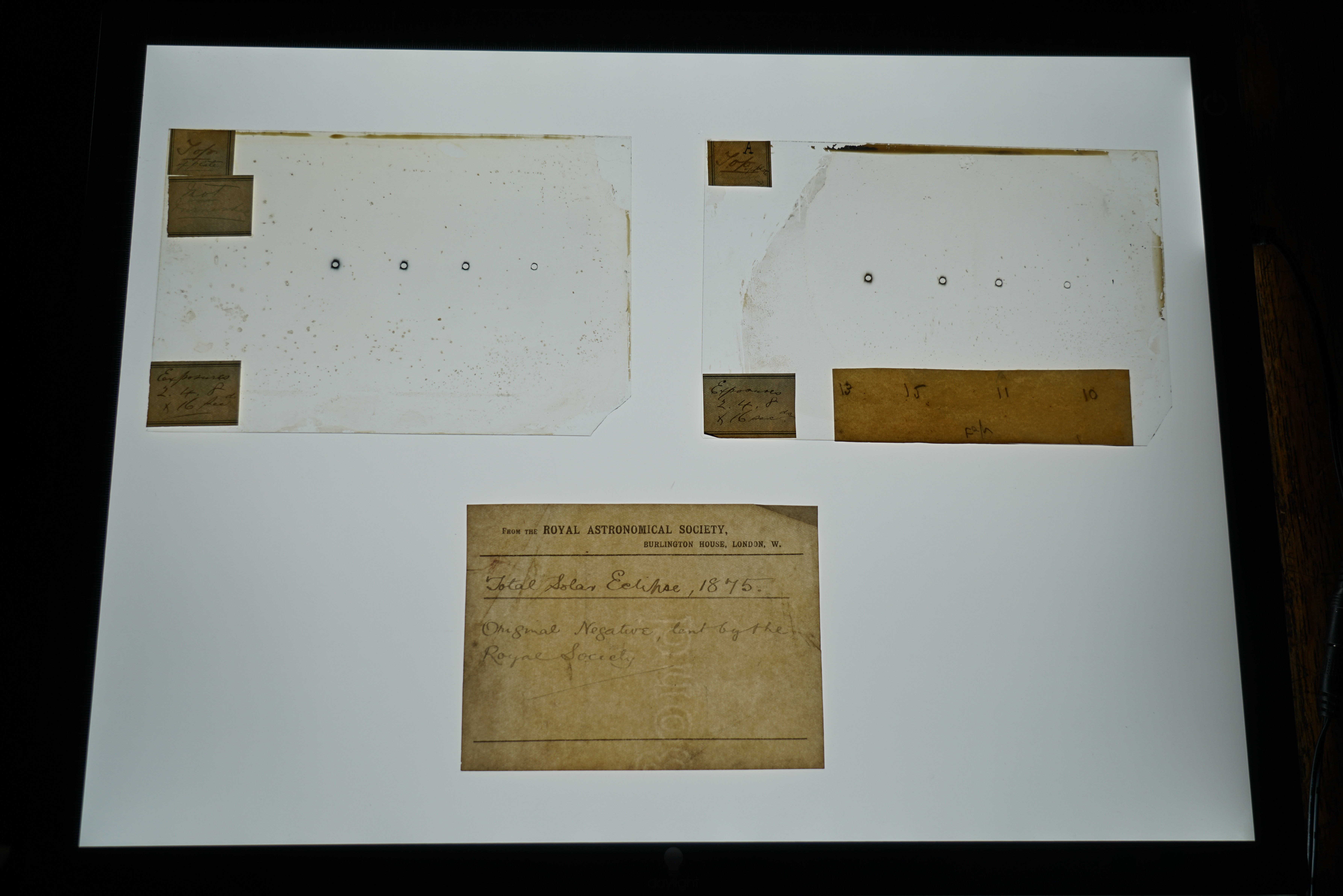
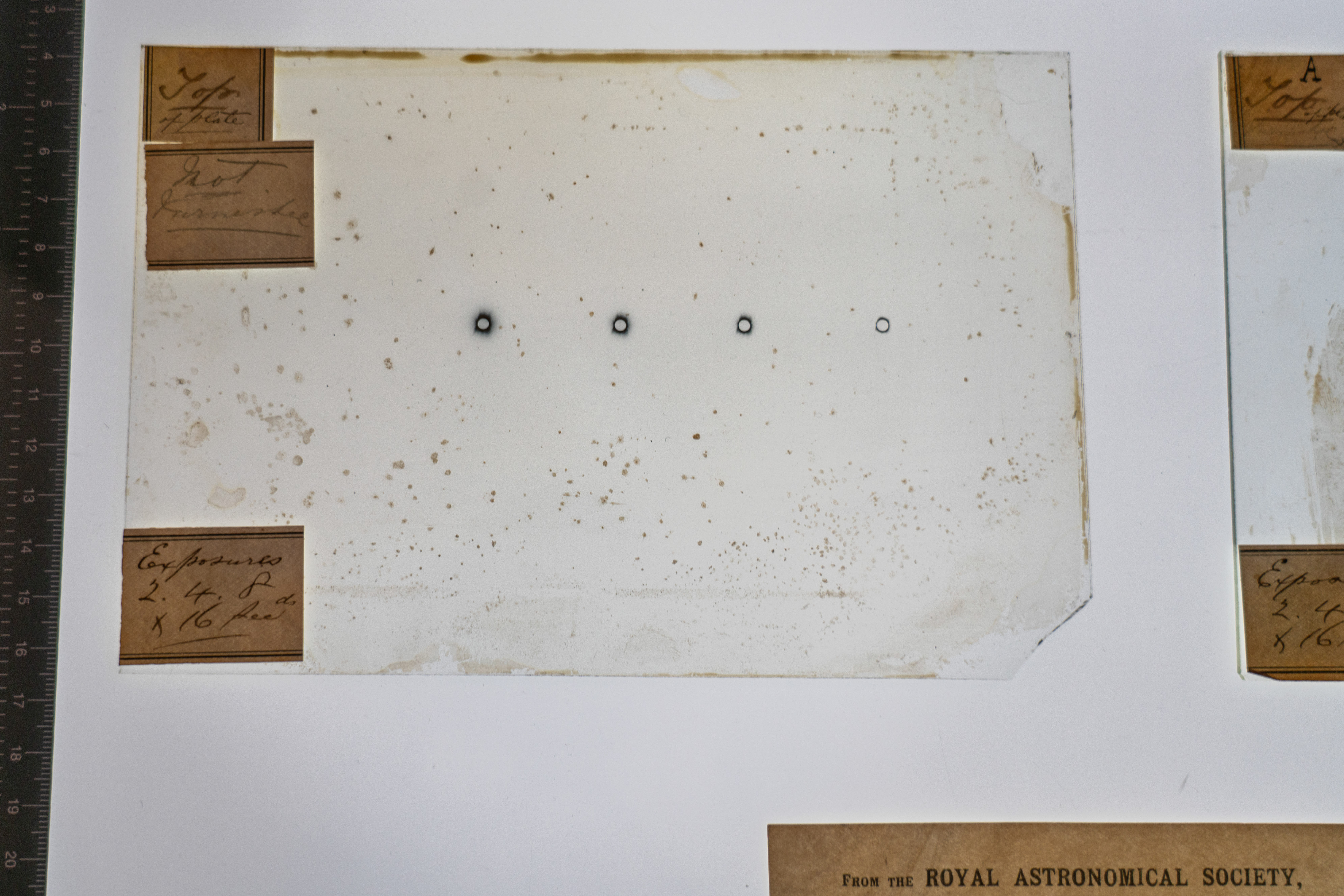
The expedition report and results appeared in Philosophical Transactions of the Royal Society, co-written by Norman Lockyer and Arthur Schuster, noting that "the corona surrounded the moon like a regular and well-defined star".
Keith Moore, Head of Library at the Royal Society, added: "The 1875 eclipse plates are a wonderful reminder that even the most eminent scientists, such as Sir Arthur Schuster, have to start somewhere.
"According to his own account, the young physicist was terrified of missing the eclipse, but an international group of people in Thailand rallied round to capture the event. I like to think that later in life, as Schuster encouraged International Unions in science after the First World War, this formative experience was somewhere in his mind."
Sian Prosser, Librarian and Archivist at the Royal Astronomical Society, said: "I'm grateful that the cataloguing and repackaging project carried out by our intern Keren Edwards under the supervision of Assistant Archivist Kate Bond has led to the rediscovery of these important photographs of the 1875 solar eclipse.
"This shows how retrospective cataloguing unlocks hidden collections. The Royal Society and Royal Astronomical Society have long worked together on matters of common interest such as solar research, and we are delighted that these fragile and valuable plates will safely return to their original home."
More eclipse items from the archives:
Elizabeth Brown. In Pursuit of a Shadow : By a Lady Astronomer (Cirencester, 1888). The Royal Astronomical Society

Women also participated in observing eclipses. Elizabeth Brown was a founding member of the British Astronomical Association. Her memoir is a travelogue of her expedition to Russia to observe the 1887 eclipse.
Memoirs of the Royal Astronomical Society, volume 41 (1879), also known as the "Eclipse Volume".
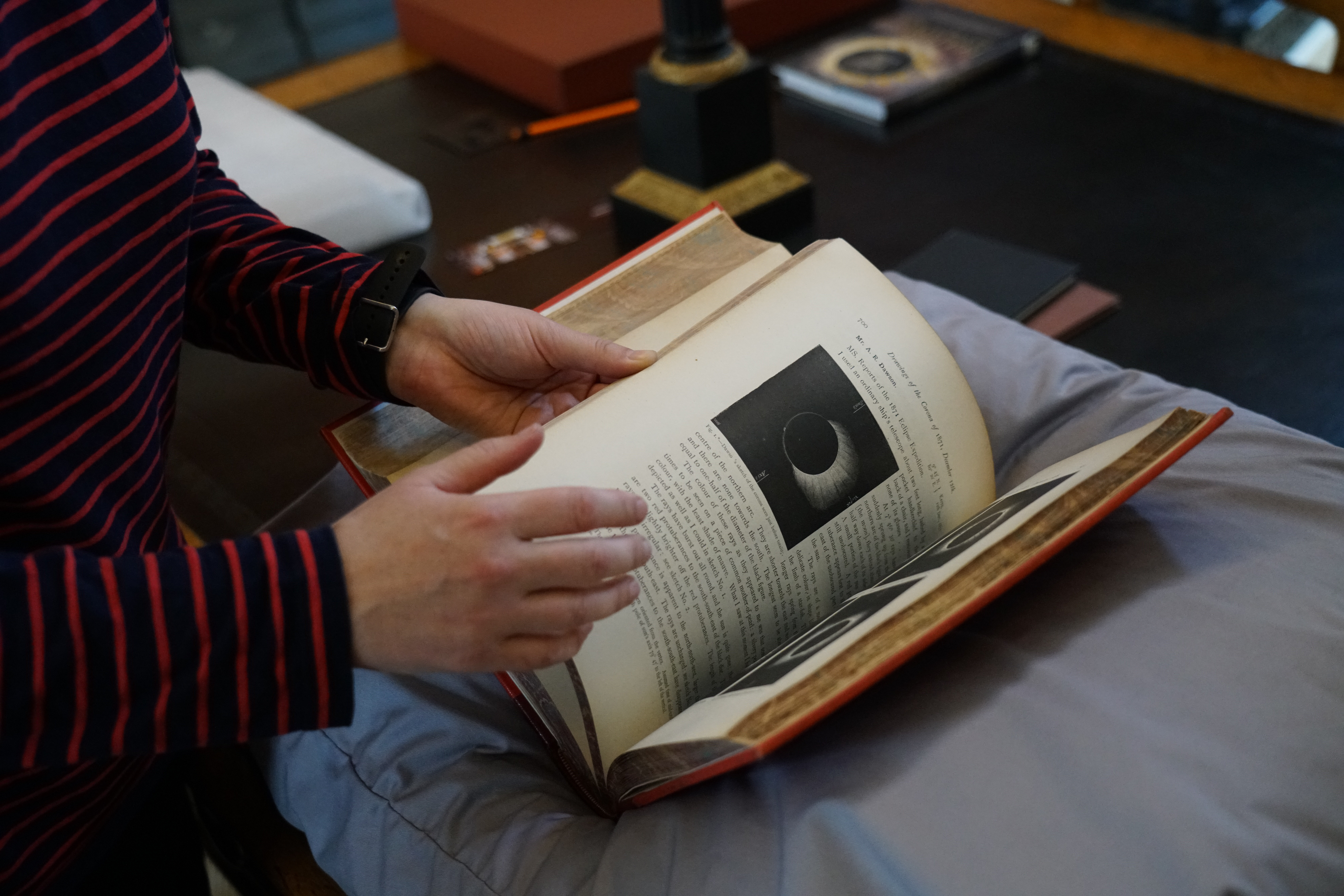
In the 19th century, solar eclipses were an unparalleled opportunity to observe the Sun’s corona and gain a deeper understanding of our nearest star. The "Eclipse Volume" is record of all observed total solar eclipses up to 1878.
Johannes Regiomontanus. Kalendarium (Augsburg, 1499). The Royal Astronomical Society
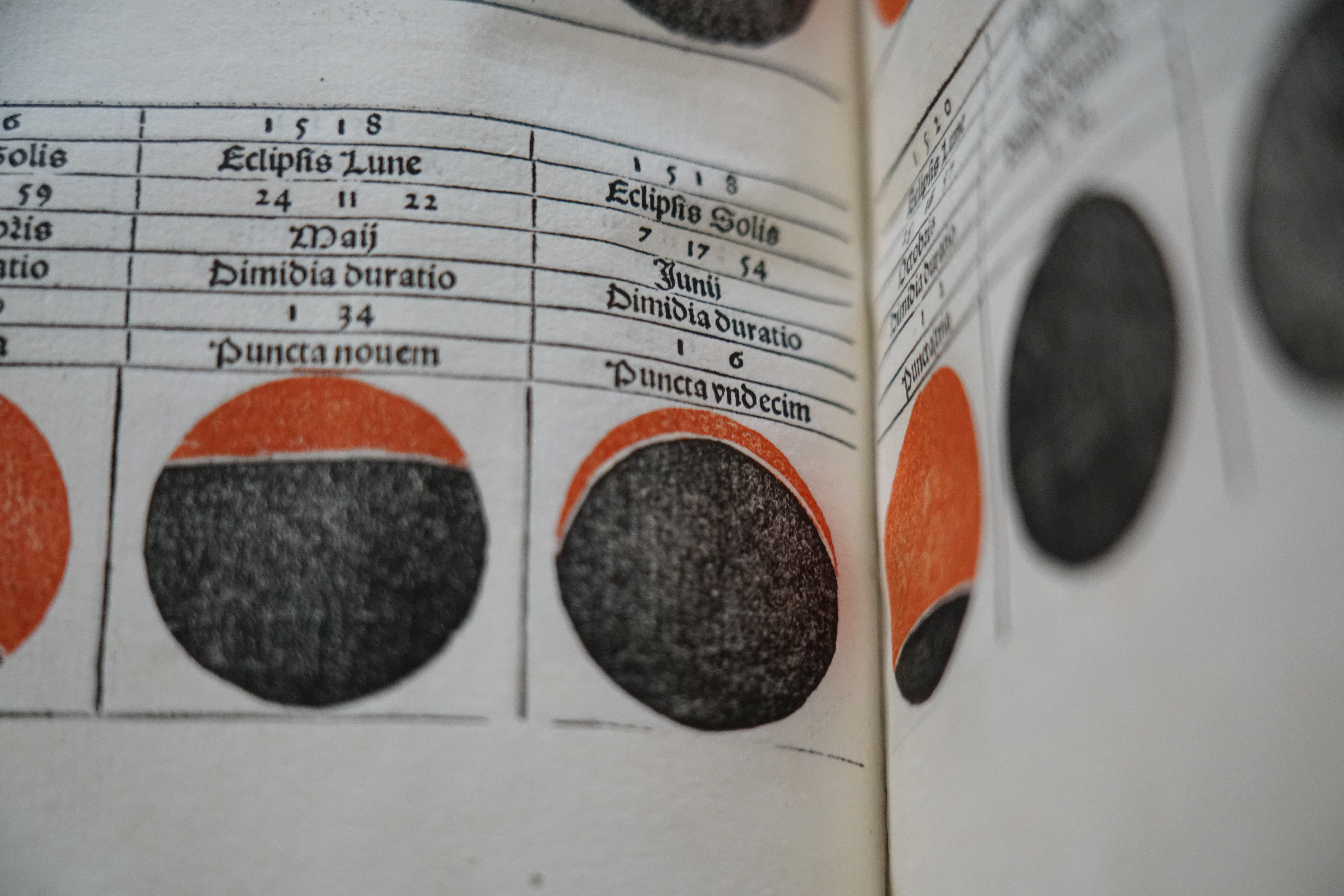
Regiomontanus was an astronomer and mathematician who also worked as a librarian before setting up his own printing press. His Kalendarium contains accurate predictions of solar and lunar eclipses. Pictured here is the closest image to the partial solar eclipse viewers in the UK will experience on 12 August 2026.
The “Eclipsia”, a scientifically devised screen for viewing the Eclipse (1927). The Royal Society
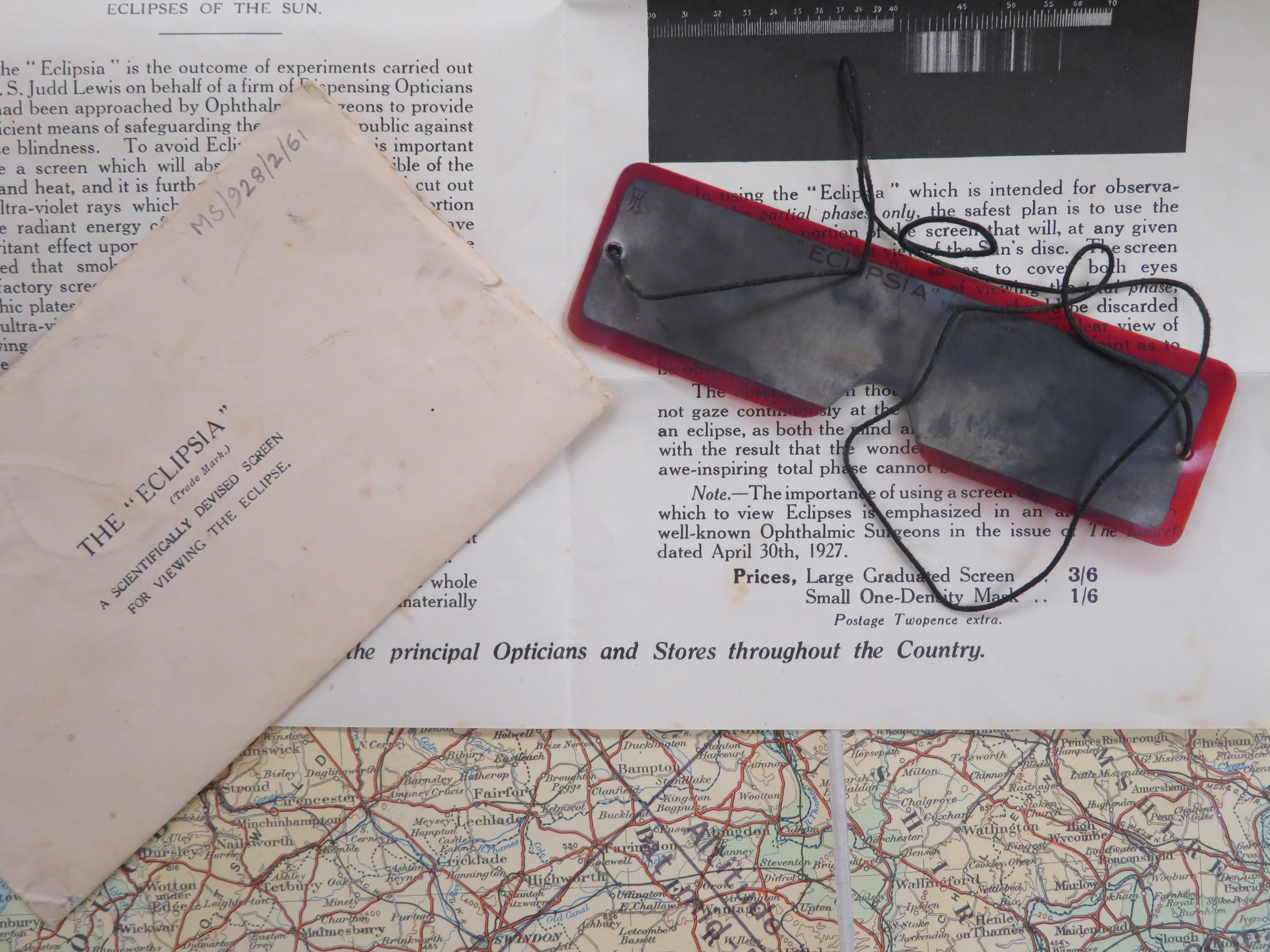
You wouldn’t want to use these to view a solar eclipse today. These “Eclipsia” glasses were designed in 1927 and came complete with a book of instructions and Ordinance Survey map showing the areas of totality in England.
Diagram of a partial eclipse, 1676. The Royal Society.
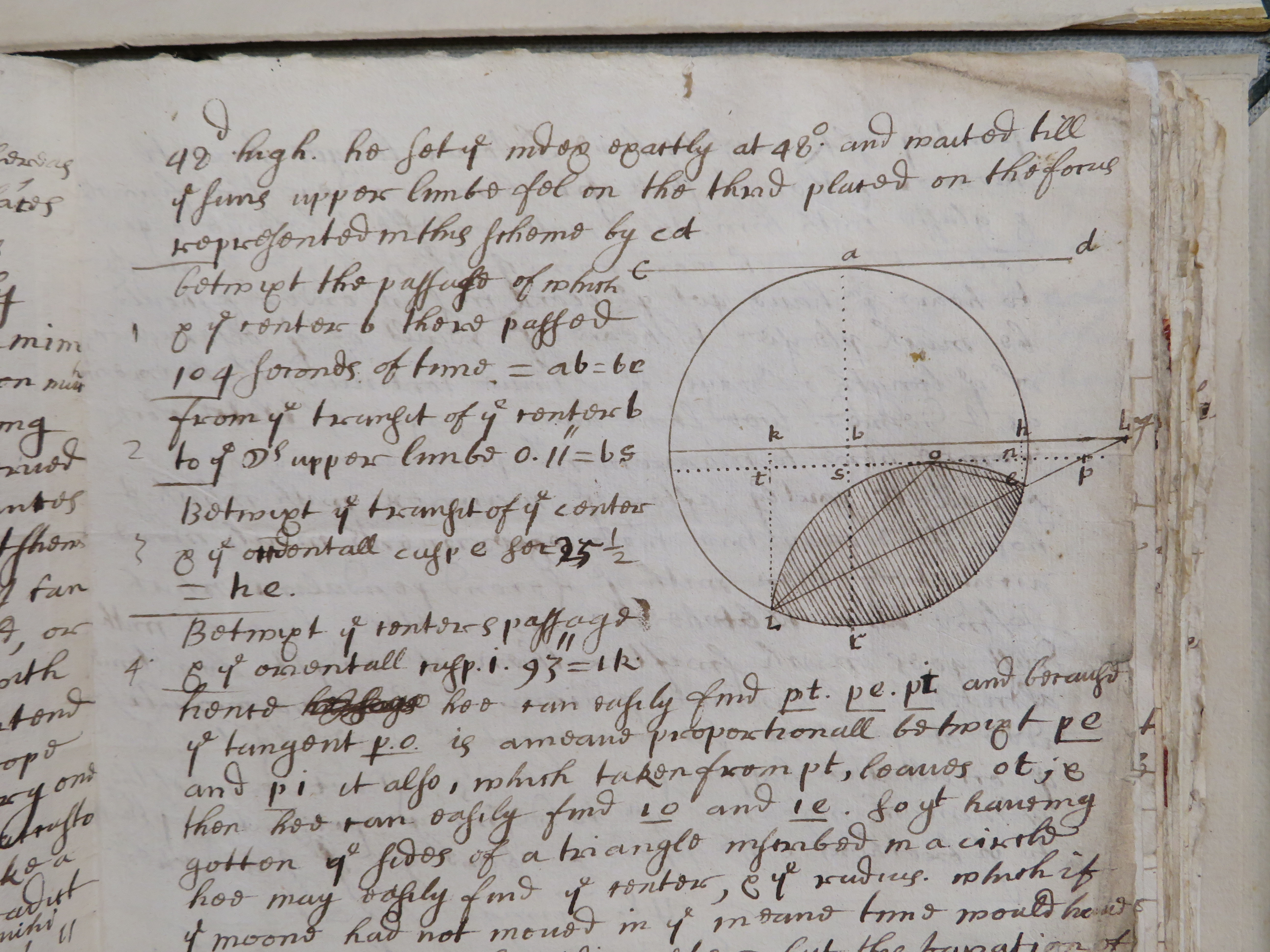
In a letter by the Astronomer Royal, John Flamsteed, dated 6 July 1676, he discusses observations of an eclipse viewed in London and Paris, including by Giovanni Cassini.
Scale of colours for comparing solar prominences, 1860
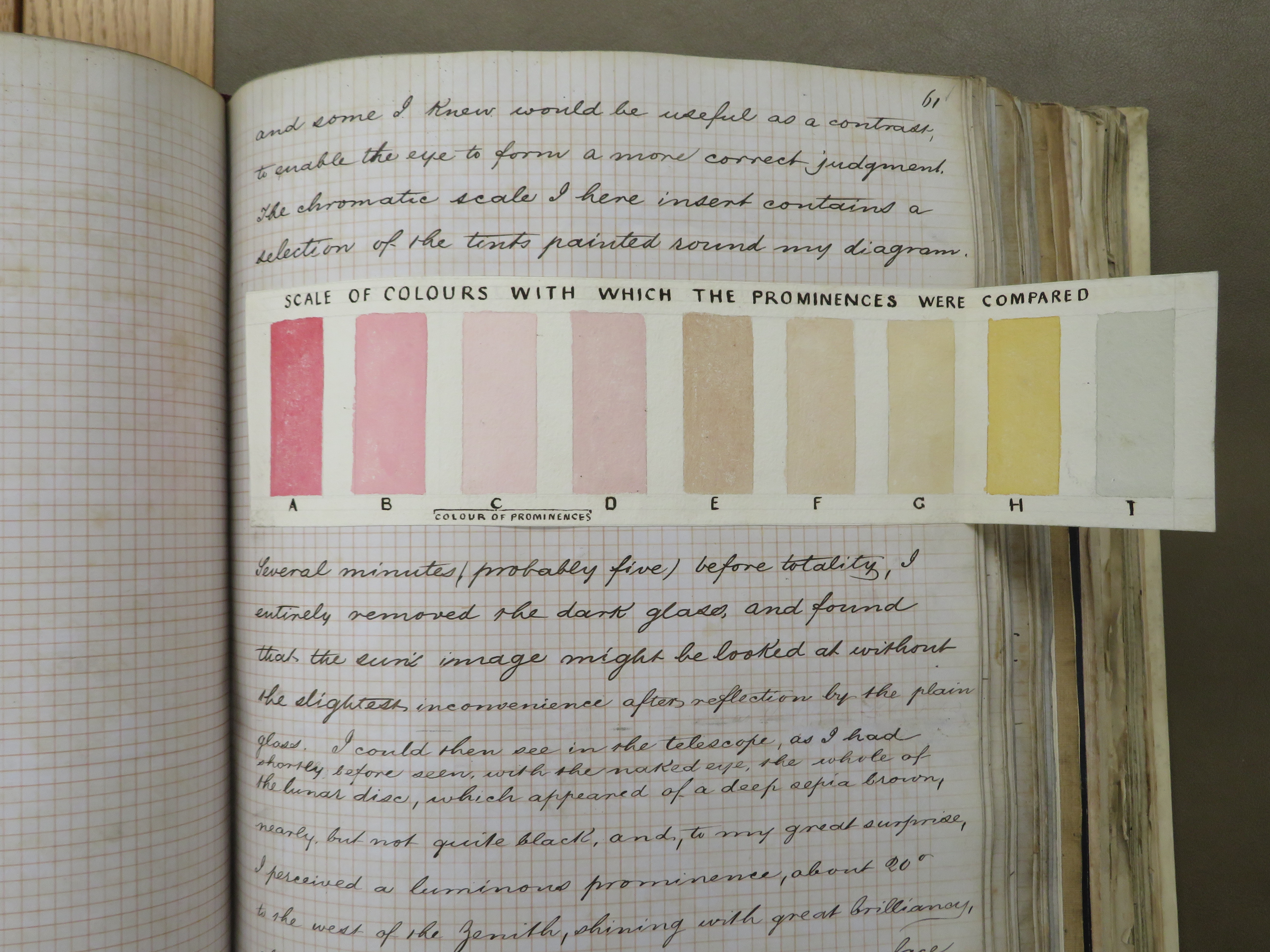
A colour chart used to define the Sun's features visible during the total eclipse of 18 July 1860, viewed in Spain by the astronomer Warren de la Rue.
Diagrams showing stages of totality during the solar eclipse of 1868. The Royal Society
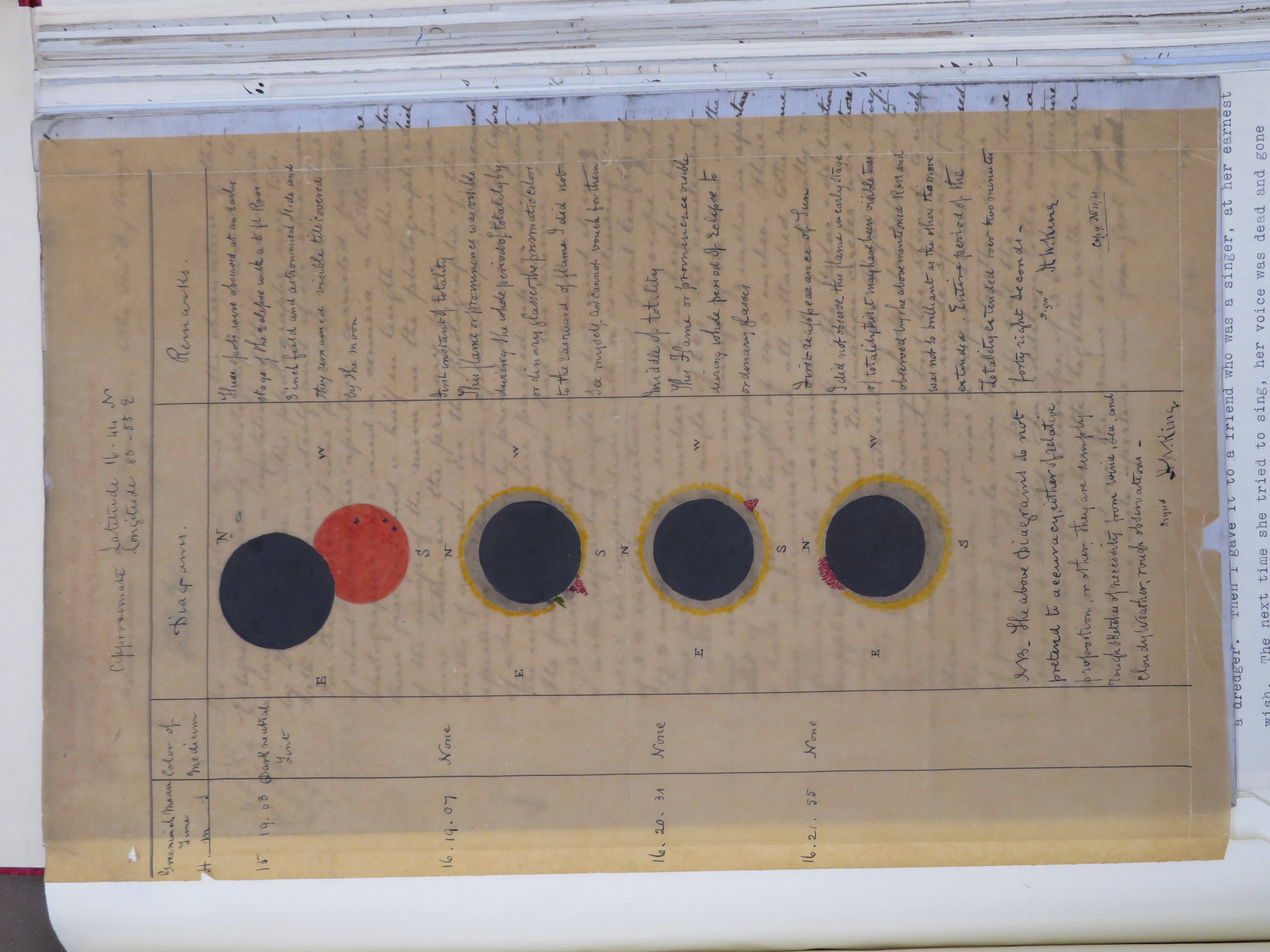
Drawings of the 1868 eclipse sent to the Royal Society by Captain Henry Welchman King of the steamship S.S. Bengal. 'The above diagrams do not pretend to accuracy...'
ENDS
Media contacts
Sam Tonkin
Royal Astronomical Society
Mob: +44 (0)7802 877 700
Notes for editors
About the Royal Astronomical Society
The Royal Astronomical Society (RAS), founded in 1820, encourages and promotes the study of astronomy, solar-system science, geophysics and closely related branches of science.
The RAS organises scientific meetings, publishes international research journals, recognises outstanding achievements by the award of medals and prizes, maintains an extensive library, supports education through grants and outreach activities and represents UK astronomy nationally and internationally. Its more than 4,000 members (Fellows), a third based overseas, include scientific researchers in universities, observatories and laboratories as well as historians of astronomy and others.
The RAS accepts papers for its journals based on the principle of successful peer review, following which experts on the Editorial Boards accept the papers for publication. The Society issues press releases based on a similar principle, but the organisations and scientists concerned have overall responsibility for their content.
Keep up with the RAS on Instagram, Bluesky, LinkedIn, Facebook and YouTube.
Download the RAS Supermassive podcast